
21-25th of September, 2026, HMU, Heraklion, Crete, Greece
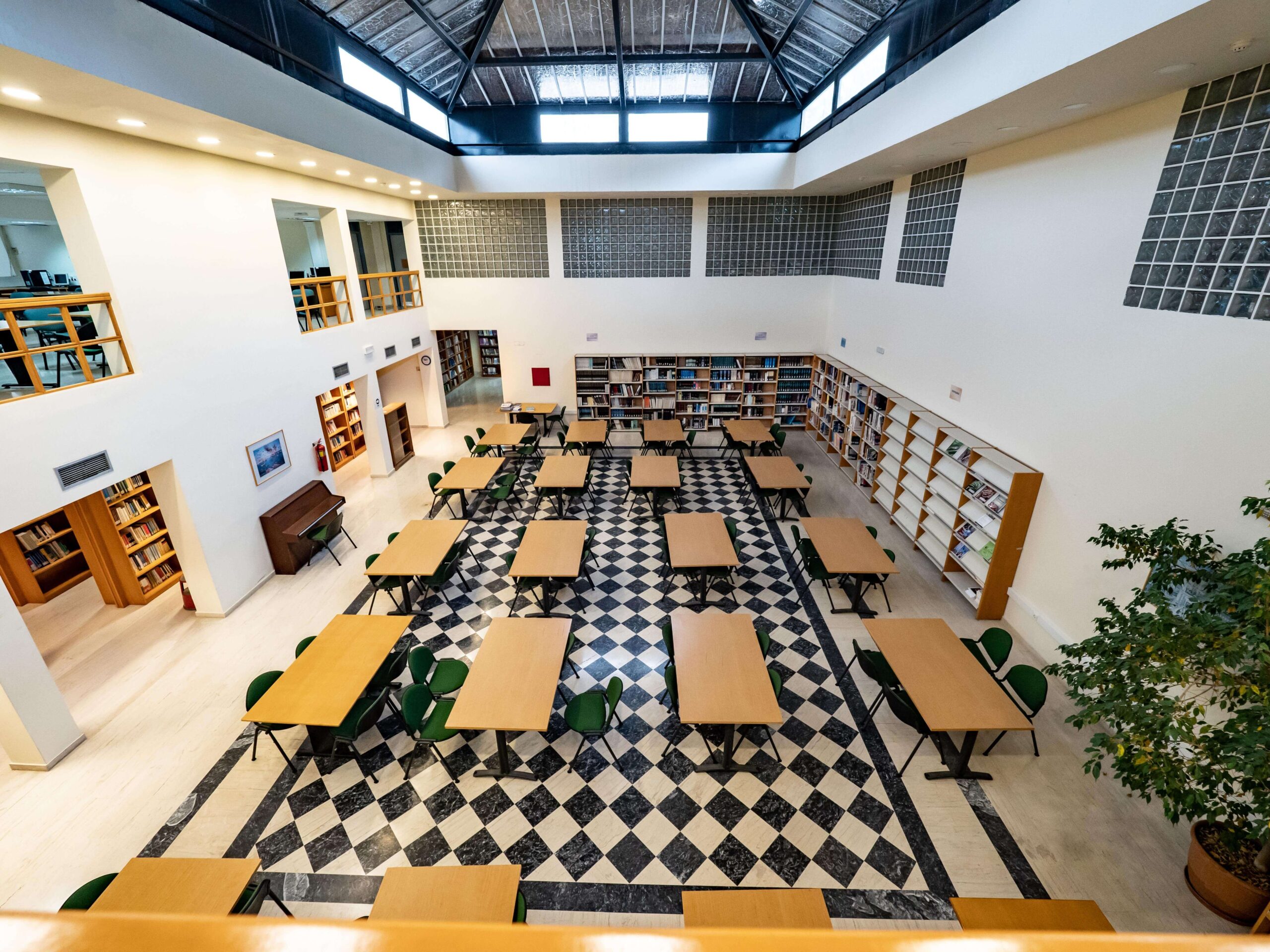
We would like to invite you to our International Week that will be held from September 21 to September 25, 2026 at the Central Library of the Hellenic Mediterranean University, located in the city of Heraklion in Greece.
Academic libraries face significant challenges resulting from declining budgets and aging staff. Hard times require hard work and collaboration and the exchange of experiences is important. Getting together and sharing our knowledge and ideas is the basic purpose of this international week that we organize. Our program appeals mostly to librarians with a background in Open Science, Library Services for Persons with Disabilities, Library consortiums, Information literacy, Empowerment of local communities.
Presentations and social events aim to provide our participants with both knowledge and leisure that they expect to find in a country like Greece!
The programme comprises presentations, library and cultural site visits, and social events.
The main themes that will be covered include:
- Library consortiums
- Library Services for Persons with Disabilities
- Open Science, Open Access
- Information literacy
- Empowerment of local communities
An additional main objective of the training week is to facilitate the exchange of knowledge and expertise between the participants and the Hellenic Mediterranean University’s library staff and of networking prospects. The programme outline is a preliminary one and does not include the social programme activities (these will be included in the final programme).
We invite every person involving in the library field to join our International Week. You will have the opportunity to enjoy Greek hospitality and get to know the Cretan culture which is influenced by Minoan, Venetian and Turkish culture.
Day 1 Moment
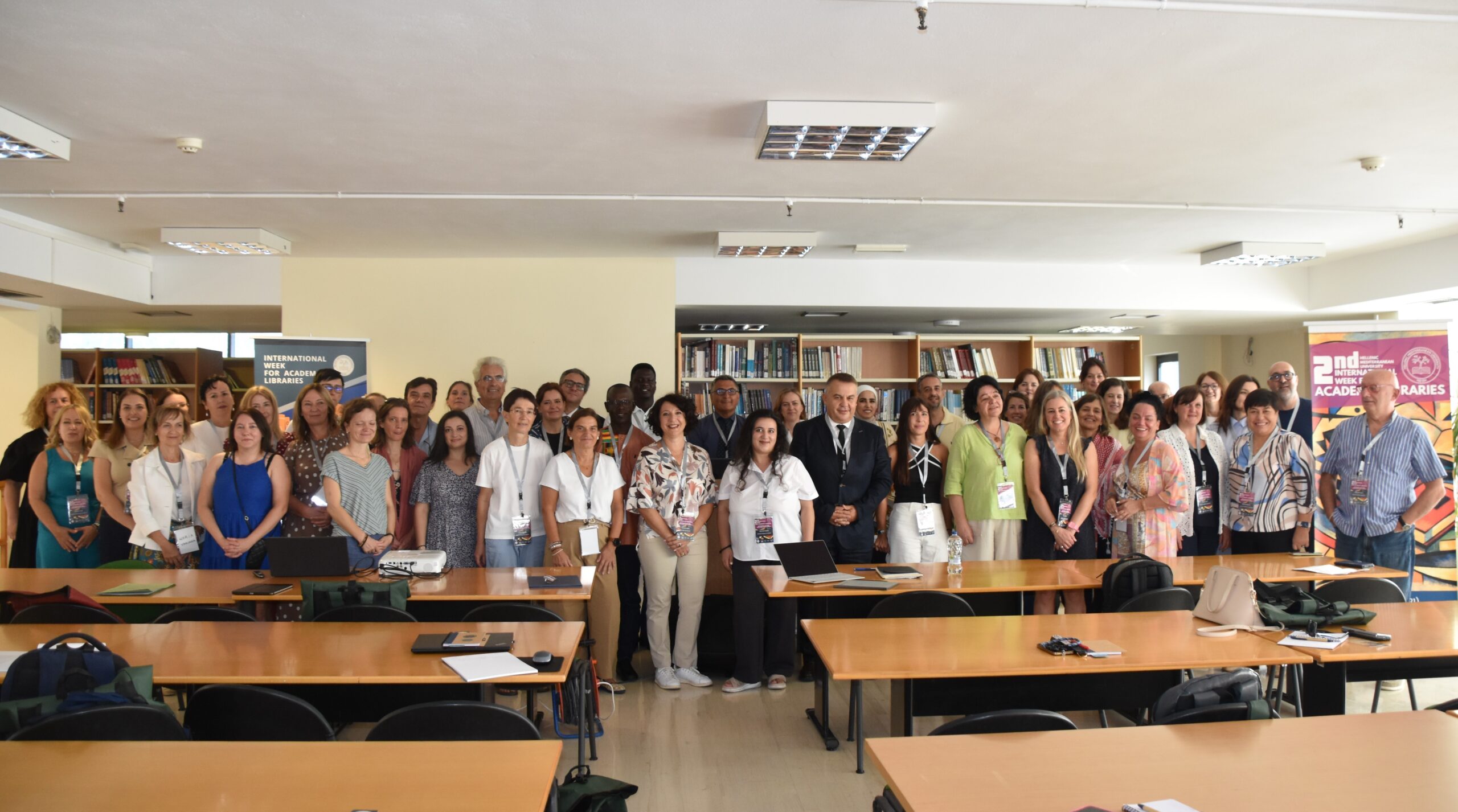
Introduce yourself
Meet the speakers
Panagiotis Kavouras
Physicist, MSc, PhD Research Integrity, Open Science, and Communication expert, HEAL-Link Office - Library and Information Centre, Aristotle University
Ntina Kakali
Director, Library and Information Centre, Panteion Univerisity, AMELib: Accessible Multi-modal Electronic Library
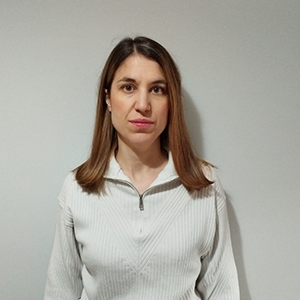
Korina Defteraiou
Education and Outreach Executive, Web2learn
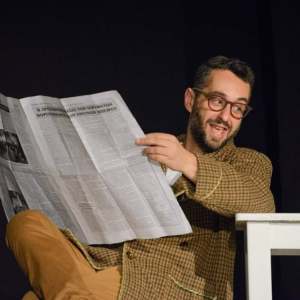
George Katsamakis
Librarian, Dataly Tech
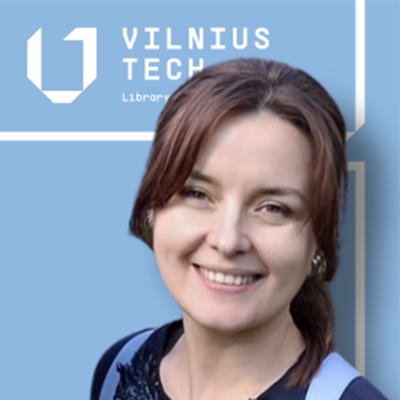
Olena Dubova
Senior Librarian, Vilnius Gediminas Technical University, Lithuania
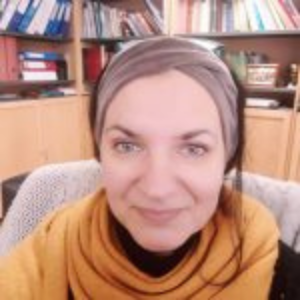
Arieta Papaioannou
Director, Library and Information Centre, University of Ioannina
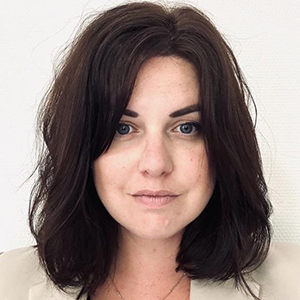
Marie-Pierre WYNANDS
Director of Information, Culture and Heritage, Catholic University of Lille, France
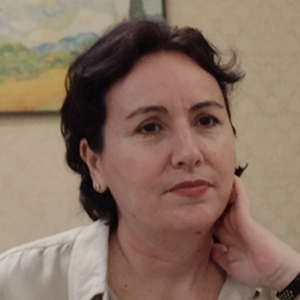
Viorica Șerban
National University of Political Studies and Public Administration (SNSPA), Romania
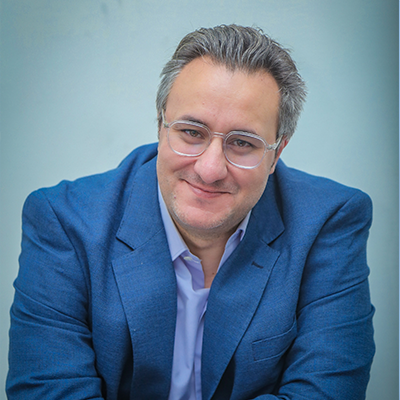
Mohamed El-Adl
Former Vice Manager of the Center for Persons with Disabilities, Mansoura University, Egypt
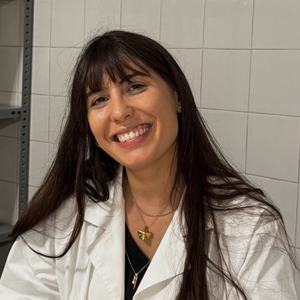
Ana Alice de Sousa Peixoto Lopes
Technical Officer, CDUA - Center for Documentation of Urban Planning and Architecture Faculty of Architecture, University of Porto
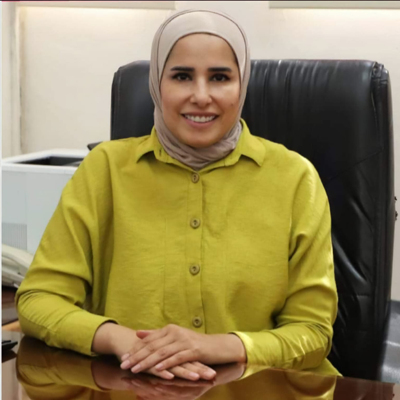
Asma Alwreikat
Director, Learning and Teaching Technology Center, Al-Balqa Applied University, Al-Salt, Jordan
Cristina Gonzales Novoa
Porto, University of A Coruña, Spain
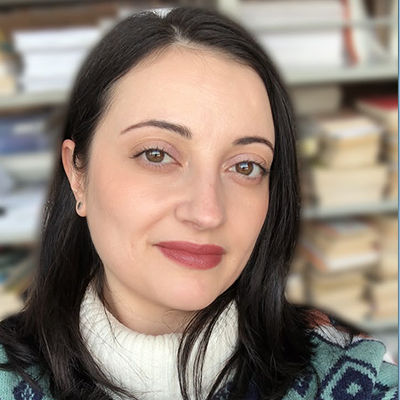
Cornelia Mihaela Stanciu
National University of Political Studies and Public Administration (SNSPA), Romania
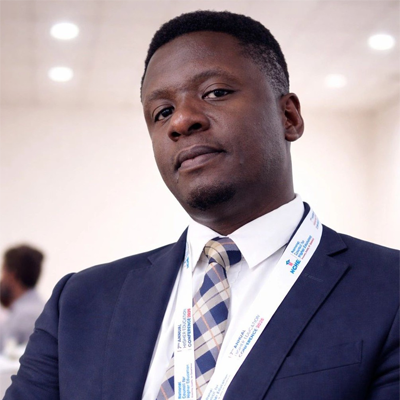
Andrew Ojulong
Head Librarian , Lira University, Uganda
Theodora Karaiskou
Library and Information Centre, University of Patras

Atahnasia Salamoura
Library and Information Centre, University of Patras
Kostas Petridis
Vice Rector of Internationalization & Extroversion, HMU
Katerina Voutiraki
Head of Library and Information Centre, HMU
Michelle Latimer
University College Dublin, Ireland
Dr Gareth Owens
Head of IRO, HMU
George Vardalachakis
Event Manager, HMU, Greece
Agnieszka Jakubik
University of Warsaw, Poland
Eirini Dragasaki
Kundourios Municipal Library of Agios Nikolaos
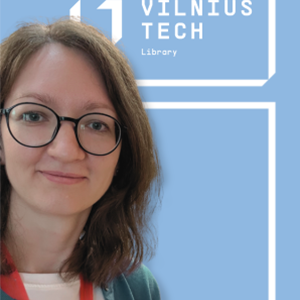
Julija Gylienė
Vilnius Gediminas Technical University / Lithuania
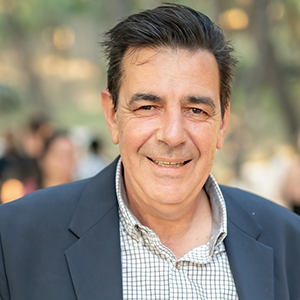
Nikolaos Dederakis
Public Central Library of Rethymnon
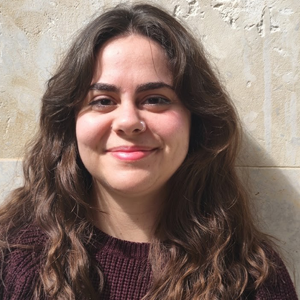
Eleni Gangiolaki
Historical Museum of Crete / Greece
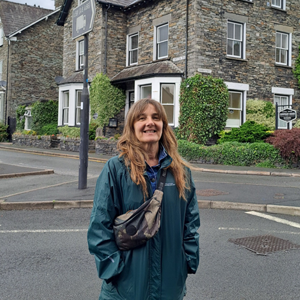
Maria Inmaculada Doval Porto
Porto, University of A Coruña, Spain
Program
| Monday, 21st Share good Library policies for persons with disabilities |
Tuesday, 22nd Information & AI literacy for Libraries and a glance in the future |
Wednesday, 23rd Library Consortiums & Associations |
Thursday, 24th Open Science & Access |
Friday, 25th Empowerment of local communities & Good Policies |
||
| 10:15 - 11:00 | Welcome in HMU - Welcome from the HMU Rector (Nektarios Papadogiannis) - Welcome from the IRO Academic Director (Ioannis Daliakopoulos) - Welcome from the HMU Library Director (Michalis Panagiotakis) |
10:00 - 10:30 |
Smart Learning in Twenty Minutes: Promoting Information and AI Literacy among University Staff (Asma Alwreikat, Al-Balqa Applied University, Al-Salt / Jordan)
Summary:“Smart Learning in Twenty Minutes” is a microlearning initiative designed to strengthen AI literacy among university staff through accessible learning sessions. Each twenty-minute session introduces an emerging AI tool, concept, or application relevant to teaching, assessment, research, and digital content creation, followed by brief discussion and exchange of experiences. The initiative supports continuous professional development, encourages responsible and ethical AI use, and helps staff integrate AI confidently into academic practice. This presentation highlights the initiative’s design, implementation, engagement approach, and institutional impact, offering a scalable model that academic libraries and universities can adapt to promote digital transformation and lifelong learning.
|
An Introduction to Hellenic Academic Libraries Consortium (Katerina Voutiraki, Hellenic Mediterranean University / Greece)
Summary:This section presents the consortium’s history and the online access to journals, books, and databases that it provides. In addition, reference is made to services related to open access agreements, the Legal Advisory Service for Intellectual Property Issues, AMELib (Accessible Multi-modal Electronic Library), the Academic Libraries Quality Assurance Unit, HERMES (Higher Education Research Metrics System), HARDMIN (Hellenic Academic Research Data Management Initiative), and the Knowledge Hub. Special mention is made of the ILSaS+ project, the innovative central infrastructure that offers a comprehensive library-as-a-service environment and the new services it provides to its members.
|
Co-creating accessible audiobooks: how academic libraries can build sustainable volunteer communities for open and equitable access to knowledge (Korina Defteraiou, Web2Learn / Greece)
Summary:This presentation will showcase the action “Audiobooks for equal access to knowledge” implemented by Web2Learn in collaboration with the Panteion University Library and its Information Centre. The action engages volunteers through crowdsourcing in the collective creation of open audiobooks for users with print disabilities. Given the continuous need for accessible materials, the action prioritised sustainability and transferability by establishing a structured methodology. To this end, a sustainability toolkit was developed to be easily replicated and adapted by libraries operating in diverse contexts. The action was part of the EU-funded project CAELUM: Open science supporting vulnerable communities: empowering university libraries in crisis response.
|
Documentation Center of the Faculty of Architecture (Ana Alice de Sousa Peixoto Lopes, Center for Documentation of Urban Planning and Architecture Faculty of Architecture, University of Porto / Portugal)
Summary:In this presentation, I will explore three spaces at FAUP where books have a significant presence: the Library, the Documentation Center, and the Bookshop. Although all three spaces share the book as a common object, they give it different meanings, functions, and forms of interaction. I will focus particularly on the Documentation Center, where I work, and examine its relationship with books and users. By comparing these three spaces, I am to show how the context in which a book is placed can profoundly change our perception of it not only as a source of knowledge, but also as a physical and cultural object.
|
| 11:00 - 11:30 | Icebraking Activity: Speed up dating (Moderated by Vardalachakis) | 10:30 - 11:00 |
From the University Library to the Directorate of Information, Culture and Heritage: Reflections on Generative AI, Critical Judgment, and Information Literacy within the Université Catholique de Lille Community (Marie-Pierre Wynands, Catholic University of Lille / France)
Summary:University libraries have long provided access to knowledge. Today, however, access is no longer enough : in an information environment transformed by generative AI, our communities must develop the skills to question, assess and contextualise information. At the Université Catholique de Lille, this shift led to the creation of a Directorate of Information, Culture and Heritage. Bringing these three dimensions together reflects both a coherent vision and the University’s history: information literacy and critical judgment are strengthened when connected to culture, memory and heritage. This presentation explores how this integrated approach can redefine the role of the university library for tomorrow.
|
Library Leadership, Strategic Partnerships and Consortium Development: Experiences from Uganda and Africa (Andrew Ojulong, Lira University / Uganda)
Summary:Examines how strategic library leadership, partnerships and consortium development can transform academic libraries into critical knowledge infrastructures for education, research, innovation and sustainable development in Uganda and Africa. Drawing on secondary literature, institutional evidence, comparative indicators and professional experience, it examines the evolution of the Consortium of Uganda University Libraries (CUUL) from collaborative resource sharing towards open science, digital transformation, research visibility, capacity development and policy engagement. Particular attention is given to strategic partnerships with national, regional and international organisations. The presentation proposes a leadership-partnership-consortium model for strengthening equitable access to knowledge, research capacity, innovation ecosystems and sustainable development.
|
From idea to sustainable action: Designing participatory actions in libraries for equal access to knowledge (Korina Defteraiou, Web2Learn / Greece)
Summary:The aim of the workshop is to engage library staff in designing sustainable actions that will mobilise communities of volunteers through crowdsourcing, with the aim of collectively creating audiobooks and accessible content for users with print disabilities. The workshop will be based on the sustainability toolkit developed as part of the action “Audiobooks for equal access to knowledge”, implemented by Web2Learn in collaboration with Panteion University Library and its Information Centre as part of the EU-funded project CAELUM. Participants will work in teams to develop their own action plan for implementing collective actions for audiobook creation through crowdsourcing.Main target audience: library staff membersDuration: 75 minutes
Audience: 20-30 participants |
Libraries and the United Nations Sustainable Development Goals (SDGs): Advancing Inclusive Knowledge Societies (Andrew Ojulong, Lira University / Uganda)
Summary:Examines the strategic contribution of academic libraries on SDGs leading to inclusive knowledge societies. Drawing on international literature, policy frameworks, secondary data and professional experience, it demonstrates how libraries advance equitable access to information, quality education, digital inclusion, research and innovation, reduced inequalities, open science and global partnerships. The presentation highlights the Ugandan experience, particularly CUUL’s SDG Action #57288, as an example of library-led SDG localisation through collaboration, resource sharing, capacity building and strategic partnerships. It positions libraries as essential knowledge infrastructures capable of connecting people, research, technology and opportunities for sustainable development.
|
| 11:30 - 12:00 |
The HMU Academic Library: An Overview (Katerina Voutiraki, Hellenic Mediterranean University / Greece)
Summary:This section presents the services provided to members of the academic community at the Hellenic Mediterranean University, as well as to external users. The Library is a pillar of the educational process and research, as it supports the university’s faculty, students, and researchers. Special mention is made of the support service for print-disabled users, as well as how the Library has implemented equal access to higher education and established its team of volunteers who support the service. It also explains how the harmonization of Greek legislation with European law—specifically with the Marrakesh Treaty, which was signed on behalf of the European Union—has affected the situation in Greece. The Library’s future plans are also presented.
|
11:00 - 11:30 |
Libraries as changemakers: reimagining the James Joyce Library and its role on campus (Michelle Latimer, University College Dublin / Ireland)
Summary:The James Joyce Library at University College Dublin (UCD) is undergoing a multi-phase redevelopment to transform from a traditional archive into an inclusive, sustainable, and technology-driven hub. The project redefines the library’s campus role by prioritizing student well-being, community engagement, and cultural preservation.The reimagined library acts as an active campus changemaker through several key initiatives including Neurodiverse and Accessible Spaces, the Library of Things, The Loop, Cultural Heritage Centre and a strong sustainability focus. Crucially, the library prioritizes equity through dedicated support for students with disabilities, ensuring inclusive spaces, accessible technologies, and tailored learning assistances.
|
Data, Quality and Impact: How HEAL-Link's MODIPAV supports Greek Academic Libraries. (Arietta Papaioannou, HEAL-Link, Greece) - Online
Summary:Since 1999, MODIPAV—the Quality Assurance Unit for Academic Libraries, operating under HEAL-Link (Hellenic Academic Libraries Link) —has served as Greece's central body for collecting statistical data and promoting quality across academic libraries. Over time it has evolved from a national statistics initiative into a modern Business Intelligence infrastructure, combining data collection and analytics to support evidence-based decision-making. This presentation traces MODIPAV's development and its current role in fostering transparency, comparability, and continuous improvement among Greek academic libraries. It closes with a look at the unit's future priorities, from expanding partnerships to strengthening data-driven library management.
|
Laboratory in OPEN SCIENCE(Korina Defteraiou, Web2Learn / Greece) |
The Koundoureios Municipal Library as a space for learning, culture, and creativity: A journey of discovery through reading, education, and children’s participation (Eirini Dragasaki /Greece)
Summary:The modern library is an open space for learning, culture, creativity, and participation, where books become the starting point for new experiences and discoveries.This presentation introduces a wide range of activities for children and school communities, such as: Summer Reading and Creativity Campaigns from 2013 to 2026, educational and experiential programs, school class visits, and themed activities centered around Christmas, Halloween, Easter, national and historical anniversaries, as well as global observances such as Children’s Book Day, International Day of Older Persons, World Water Day, Autism Awareness Day, Volunteer Day, World Environment Day, Family Day, and many others.
Through literature, storytelling, play, art, science, folklore, history, and culture, children explore, express themselves, create, collaborate, and actively participate. The library becomes a dynamic educational and cultural space, where reading is linked to creativity, knowledge, exploration, and the joy of discovery. |
| 12:00 - 12:15 | Short Break | 11:30 - 11:45 | Short Break | Short Break | Short Break | Short Break |
| 12:15 - 12:45 |
The role of the Egyptian government in establishing the rights of persons with disabilities with special respect for library services (Mohamed ElAdl, Mansoura University / Egypt)
Summary:Egyptian government, represented by the Ministry of Education and the Ministry of Higher Education, is committed to the inclusion of students with disabilities from the initiation of their school life to the graduation of college through enforcing policies and equality for academic access and waiver of tuition fees, as well as the commitment of providing accessible library services. The removal of barriers of learning and the implementation of assistive technologies with complete access to digital repositories, and providing physical spaces and braille resources to ensure equal access of knowledge and empower students with disabilities to gain knowledge and achieve success in life.
|
11:45 - 12:15 |
Information Literacy in the Age of AI: The Experience of VILNIUS TECH Library (Olena Dubova & Julija Gylienė, Vilnius Gediminas Technical University / Lithuania)
Summary:Artificial intelligence is becoming an important part of academic study and research. In this presentation, we will share the experience of VILNIUS TECH Library in integrating AI into information literacy training. We will present the AI tools available in our virtual library and subscribed databases, show how they are introduced during library training sessions, and discuss the importance of combining these new technologies with critical evaluation, responsible AI use, and traditional information literacy skills.
|
Library consortiums and development of the nationwide library network in Poland Agnieszka Jakubik, University of Warsaw / Poland
Summary:A significant portion of the collections held by Polish academic libraries remains invisible online, and even uncatalogued. Therefore, a key objective of the Polish digital strategy until 2035 is to ensure access to information about these collections via publicly accessible central catalogue systems.In my presentation, I will briefly outline the progress made on the digital integration of Polish academic libraries using the Alma library services platform.
|
The OPEN Science in Greece: principles and practices of Open Science, its connections with Research Integrity and the relevant services offered by HEAL-Link (Panagiotis Kavouras, HEAL-Link, Greece) - Online
Summary:Open Science (OS), Research Integrity (RI), and reproducibility of research results are broad fields of intervention that promote responsible and reliable research. Their principles, practices, and relevant communities of interest have deep overlaps and should not be considered or studied in isolation. Due to the systemic change they aim to bring to the functioning of the research enterprise, they must be promoted by influential stakeholders, in order for their practices to become the norm at the research “shop floor.” HEAL-Link, as the network of the academic libraries of all Greek publicly funded Universities and Research Centers, has a uniquely wide outreach to the Greek research and Academic community and can play a decisive role in shifting research culture towards systemic adoption of OS, RI, and reproducibility. Here we will describe HEAL-Link’s initiatives to promote OS, RI, and reproducibility in the Greek research ecosystem, by using the model for culture change, to clearly depict that its activities address all five levels of interventions of this model, i.e. from developing infrastructures until suggesting policies. Our aim is to highlight that efforts to promote OS and RI can be more effectively pursued in combination, rather as separate initiatives.
|
Supercharged by AI: an IFLA exhibition - intervention at Greek libraries (Katerina Voutiraki, Hellenic Meditteranean University /Greece)
Summary:This presentation refers to the recent IFLA project entitled "Supercharged by AI", which was implemented by six libraries in different regions of the country with the support of AGLIS. Specifically, IFLA in collaboration with the Polytechnico di Milano designed a creative intervention about the impact of Artificial Intelligence on several daily activities, ranging from social networks and public participation to more serious cases of financial and sexual harassment. The exhibition, which was accompanied by various actions and events, took place in the following libraries: Municipal Library of Piraeus, Library of the Hellenic Mediterranean University, Municipal Library of Thessaloniki, Library of the University of Macedonia, Koraes Central Historical Public Library of Chios and Kalambaka Library. The paper presents the collaborative processes and best practices followed during the selection of libraries and the team that dealt with the preparation-processing of the material, as well as the final realization of the exhibitions. It also highlights the added value of cooperation and re-use of resources between Library Associations, as well as between libraries in the country on very important issues that concern modern society, such as Artificial Intelligence. Finally, the contribution of libraries to the empowerment of citizens and the strengthening of social resilience is highlighted.
|
| 12:45 - 13:15 |
AMELib: Accessible Multi-modal Electronic Library (Ntina Kakali, HEAL-Link, Greece) - Online
Summary:This presentation examines the evolution of accessibility services in Greek academic libraries and highlights the work of AMELib. Accessibility services were developed internationally from the 1990s onwards, with their implementation in Greece following at a later stage. Drawing on the principles of the UN Convention on the Rights of Persons with Disabilities and the Marrakesh Treaty, IFLA has established guidelines for accessible library services.
|
12:15 - 12:45 |
The impact of AI in Academic Libraries (Konstantinos Petridis, Hellenic Mediterranean University / Greece)
Summary:A Librarian's Toolbox: as AI reshapes research, learning, and library spaces, librarians need new skills to match. This talk unpacks the toolbox academic librarians need to turn AI's disruption into opportunity—strengthening their role as campus innovation hubs.
|
HEAL-Link's Scholarly Communication Unit: Supporting Open Science (Theodora Karaiskou & Athanasia Salamoura, HEAL-Link, Greece) - Online
Summary:This session presents the key services provided by the Scholarly Communication Unit at HEAL-Link, focusing on transformative Open Access agreements with publishers, the HERMES (Higher Education Research Metrics System), and HARDMIN, the national research data repository. Participants will gain an overview of how these services support researchers, research institutions, and Open Science practices in Greece.
|
Koha :open source library system (George Katsamakis, Dataly Tech / Greece)
Summary:Historical Evolution and Strategic Needs: The collaboration among Greek University Libraries progressed through three distinct eras: the consolidation of bibliographic records via ΣΚΕΑΒ (1997-2015), the management of library tasks under the shared Sierra infrastructure of ILSaS/Mitos (2015-2025), and the current transition to ILSaS+ (2025-), which introduces an innovative digital environment powered by open-source tools. Driven by the need for low maintenance costs, infrastructure centralization, and greater local autonomy, the consortium shifted toward collaborative cataloging and open-source software. This massive joint initiative currently serves over 500,000 users and 385 librarians, managing 3.2 million volumes and 1.7 million bibliographic records across 20 Universities and 82 branches.
|
Public Central Library of Rethymnon Innovative initiatives and best practices for opening up the Library to the local community (Nikolaos Dederakis, Public Central Library of Rethymnon)
Summary:The presentation covers the Library’s innovative initiatives and best practices for engaging with the local community.
|
| 13:15 - 14:30 | Lunch Break | 12:45 - 14:00 | Lunch Break | Lunch Break | Lunch Break | Lunch Break |
| 14:30 - 15:30 | Round table in the topic for more accessible Libraries(Moderator: Katerina Voutiraki, Panelists Mohamed ElAdl, Agnieszka Jakubik) | 14:00 - 15:00 | Round table in the topic of AI & Information Literacy(Moderator: Konstantinos Petridis, Panelists: Asma Al-Wreikat, Julija Gylienė, Olena Dubova) | Round table in Academic Library Associations(Moderator: Ioannis Daliakopoulos, Panelists Agnieszka Jakubik, Andrew Ojulong, Bosco Butuga) |
SNSPA Open Science: From Vision to Community and Practice (Cornelia Mihaela Stanciu & Viorica Șerban, National University of Political Studies and Public Administration / Romania)
Summary:This presentation explores SNSPA’s institutional journey toward integrating Open Science into its research and academic practices. Grounded in democratic values and strengthened through SNSPA’s participation in CIVICA European Alliance, this transformation reflects a coherent institutional vision supported by strategic initiatives, capacity-building activities, and community engagement. The SNSPA Library plays a central role in awareness-raising, training, and researcher support across the research lifecycle. The presentation highlights three library-coordinated projects—SUCCES@SNSPA (2024), CONCERT@SNSPA (2025), and ECOS_AI@SNSPA (2026)—which illustrate how collaboration and targeted services foster an emerging Open Science culture. It concludes with lessons learned and future directions for sustainable institutional change.
From library to science. Gender equality and epistemological transformation at the library of University of A Coruña (Cristina Gonzalez Novoa & María Inmaculada Doval Porto, University of A Coruña / Spain)
Summary:This presentation examines how the Library of the University of A Coruña (BUDC) integrates gender equality into its role as a knowledge institution. Moving “from library to science,” it conceives university libraries as critical infrastructures, cultural mediators, and active agents of scientific and social transformation. Drawing on feminist epistemology, the model addresses androcentric and exclusionary biases through inclusive collections, greater visibility of women and underrepresented groups, fair citation practices, gender-sensitive research, and cultural initiatives. Ultimately, the BUDC is presented as a transferable model of transformative librarianship promoting epistemic justice, structural equality, and critical knowledge production.
|
Preserving Memory, Empowering Communities: Educational Strategies at the Historical Museum of Crete (Eleni Gangiolaki, Historical Museum of Crete / Greece)
Summary:Grounded in non-formal learning, and modern museum pedagogy, the Historical Museum of Crete fosters historical consciousness and critical thinking across diverse audiences. Through interactive educational visits, tailored learning materials, and targeted outreach for schools and social groups, our established programs empower local communities and deepen regional connections. This presentation outlines best practices for leveraging local history and non-formal educational practices to cultivate active, thoughtful citizens.
|
| 15:30 - 17:00 | Campus Tour within the HMU Campus(Dr Gareth Owens) | |||||
| 17:00 - 18:00 | Knossos Minoan Palace Visit (Dr G. Owens) | Candia Venetian Walls Tour (Kallia Nikolidaki) | ||||
| 20:00 - 23:00 | Farewell Dinner |
Cultural Activities
Alongside its academic programme, the 2nd International Week for Academic Libraries offers participants the opportunity to experience the rich cultural heritage of Heraklion. The programme includes a visit to the Palace of Knossos, a tour of the historic Candia Venetian Walls, and a farewell dinner at Petousis Restaurant, bringing the week to a memorable close with authentic Cretan hospitality.
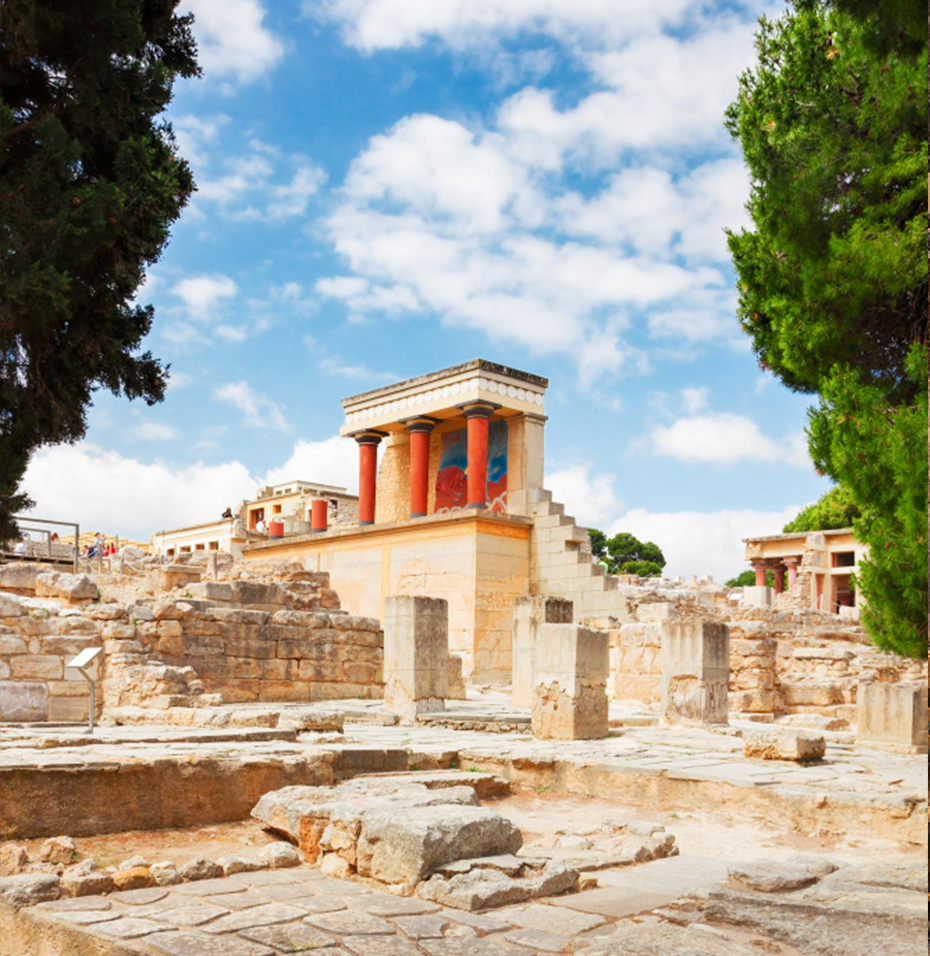
Knossos Minoan Palace Visit @ Wednesday, 23rd, Pick up at 16:30 from HMU Campus
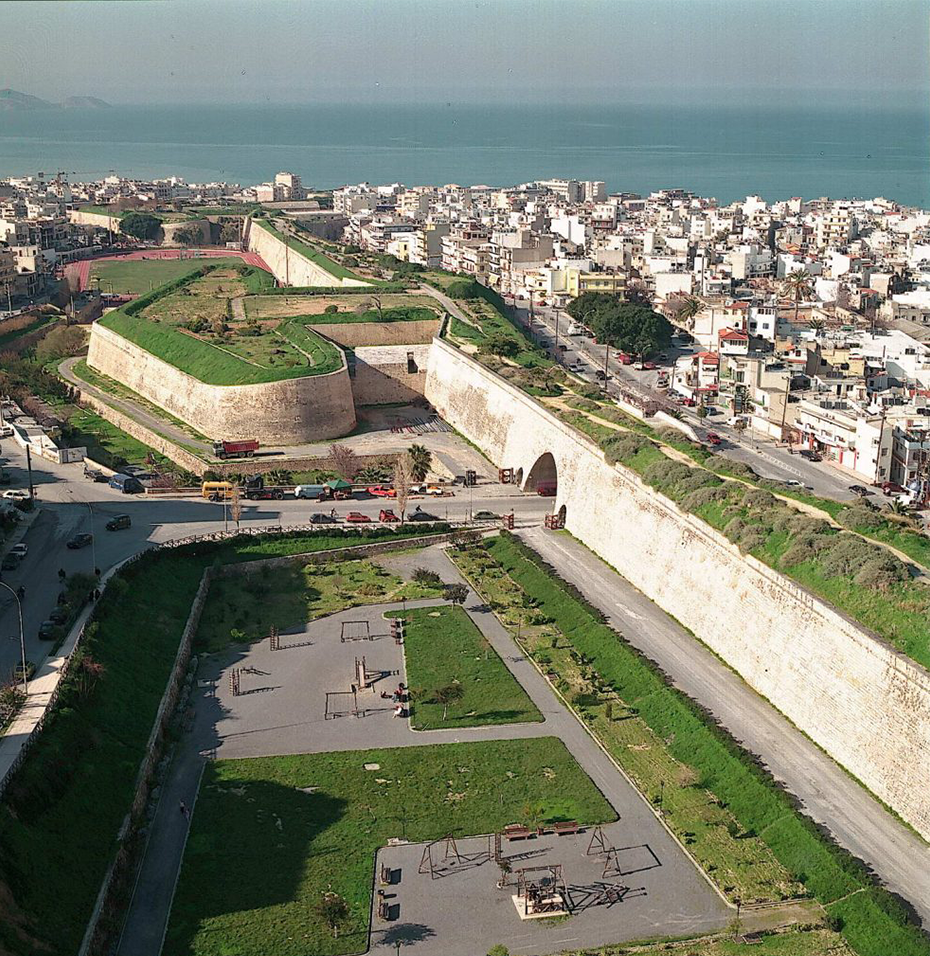
Candia Venetian Walls Tour @ Thursday, 24th, Starts at 17:00
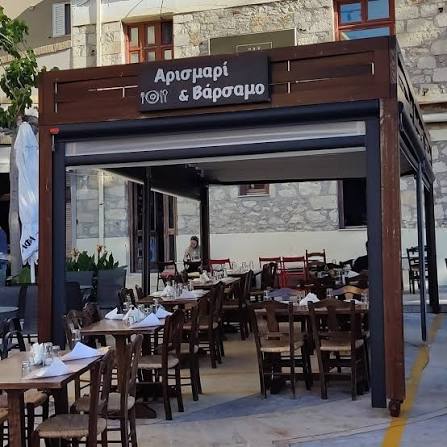
Farewell Dinner Arismari & Varsamo @ Thursday, 24th, 20:00 - 23:00
The Venue
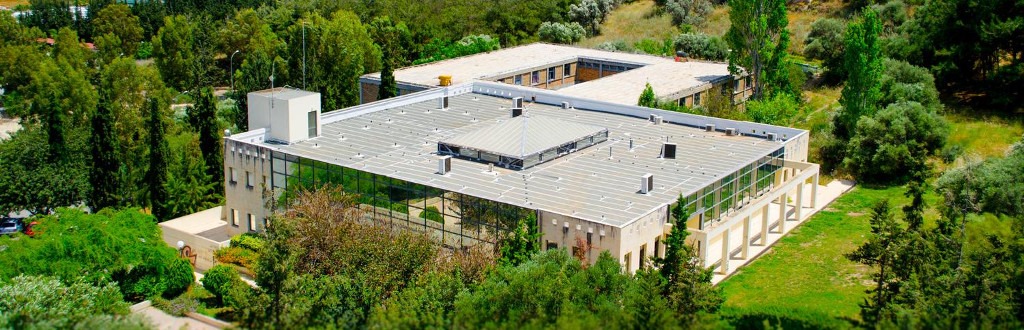
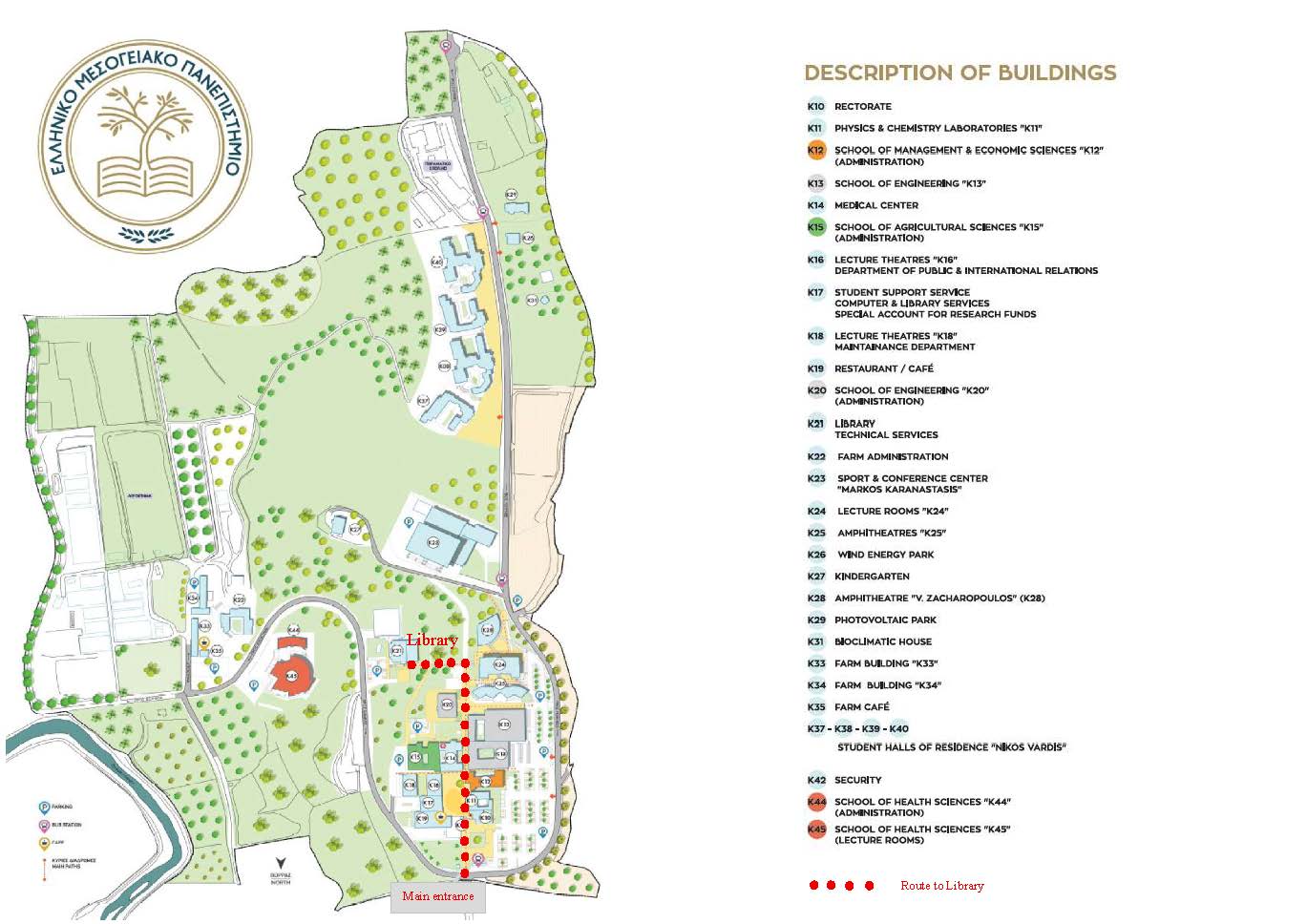
Address: Central Library, Hellenic Mediterranean University (HMU), Estavromenos, 71410 Heraklion, Crete, Greece.
View HMU on Google Maps
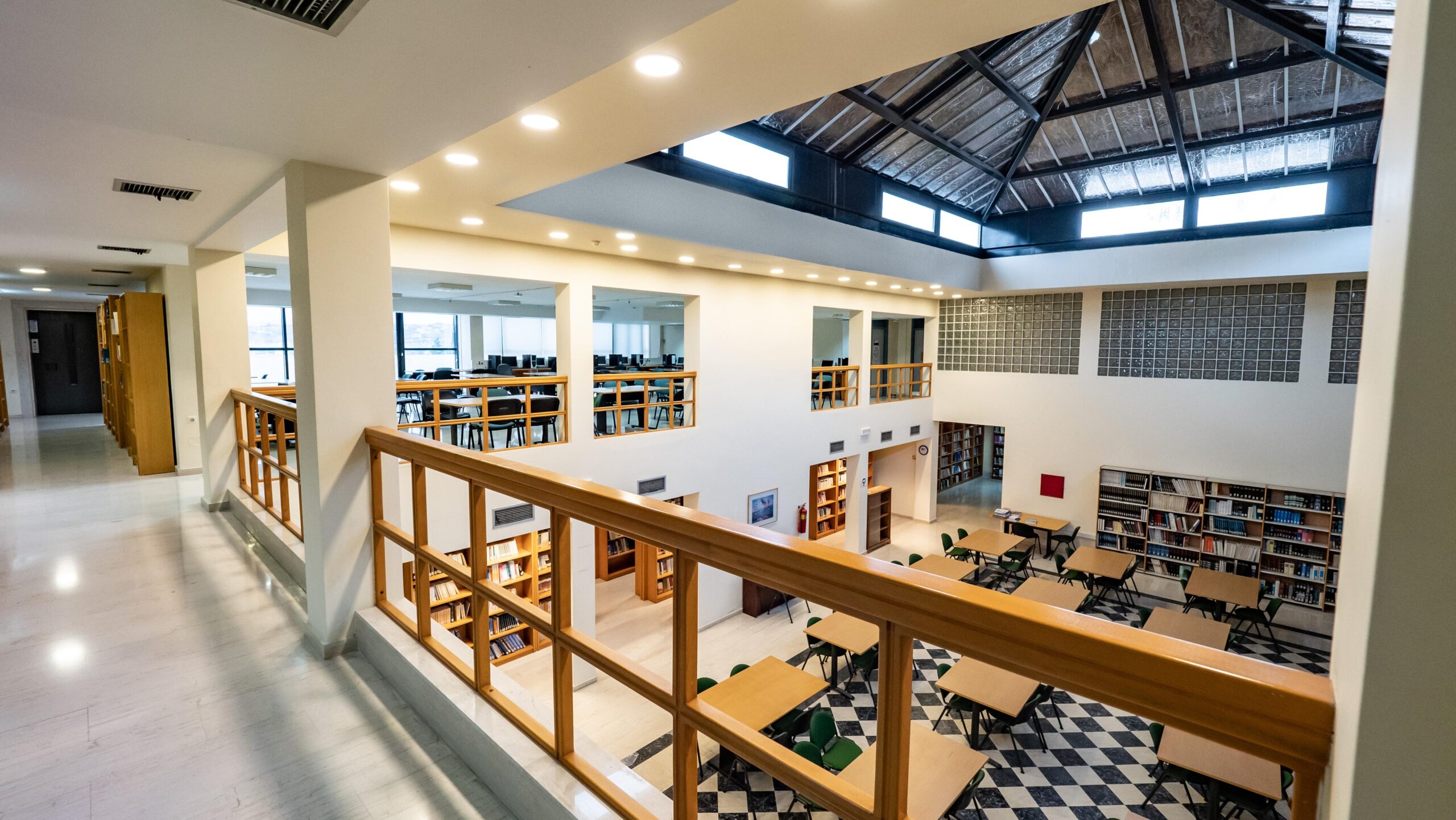
The International Week will take place at the Central Library of the Hellenic Mediterranean University (HMU), located on the University’s main campus in Heraklion, Crete.
Getting to HMU from Heraklion city centre
The most convenient bus stop for participants staying in the city centre is “Platia Eleftherias – Astoria” (Liberty Square – Astoria), located at Eleftherias Square in the heart of Heraklion.
View Liberty Square – Astoria on Google Maps
From there, take Bus Line No. 12 in the direction of EL.ME.PA. (Hellenic Mediterranean University). The bus stops at the HMU campus and the journey from the city centre takes approximately 15–20 minutes, depending on traffic.
Line 12 connects Heraklion Airport with HMU, passing through the city centre. Participants staying in the centre can therefore board the bus directly at the Liberty Square – Astoria stop.
Google Maps directions from Liberty Square to HMU by public transport
Bus schedules may vary during the year. Participants are advised to check the latest timetable before travelling.
Bus information:
- Heraklion Urban Bus – Official Timetables
- Live Bus Arrivals / Telematics
- Heraklion Urban Bus official website and mobile app information
For trips within Zone A, which includes HMU, the regular ticket currently costs €1.30 when purchased before boarding and €2.30 when purchased on the bus.
By taxi
A convenient taxi rank for participants staying in the city centre is located in the Eleftherias Square – Astoria area, close to the main bus stop.
View taxis near Eleftherias Square – Astoria on Google Maps
Another taxi rank is available at Kornarou Square, also within easy walking distance of many hotels in the city centre.
View Kornarou Square taxi rank on Google Maps
A taxi ride from Heraklion city centre to HMU usually takes approximately 10–15 minutes, depending on traffic and the exact pick-up location.
Taxis can also be booked through mobile applications. FREENOW operates in Heraklion and allows passengers to request and track a taxi directly through the app. Participants may also use Knossos Taxi, a local taxi-booking service operating in Heraklion.
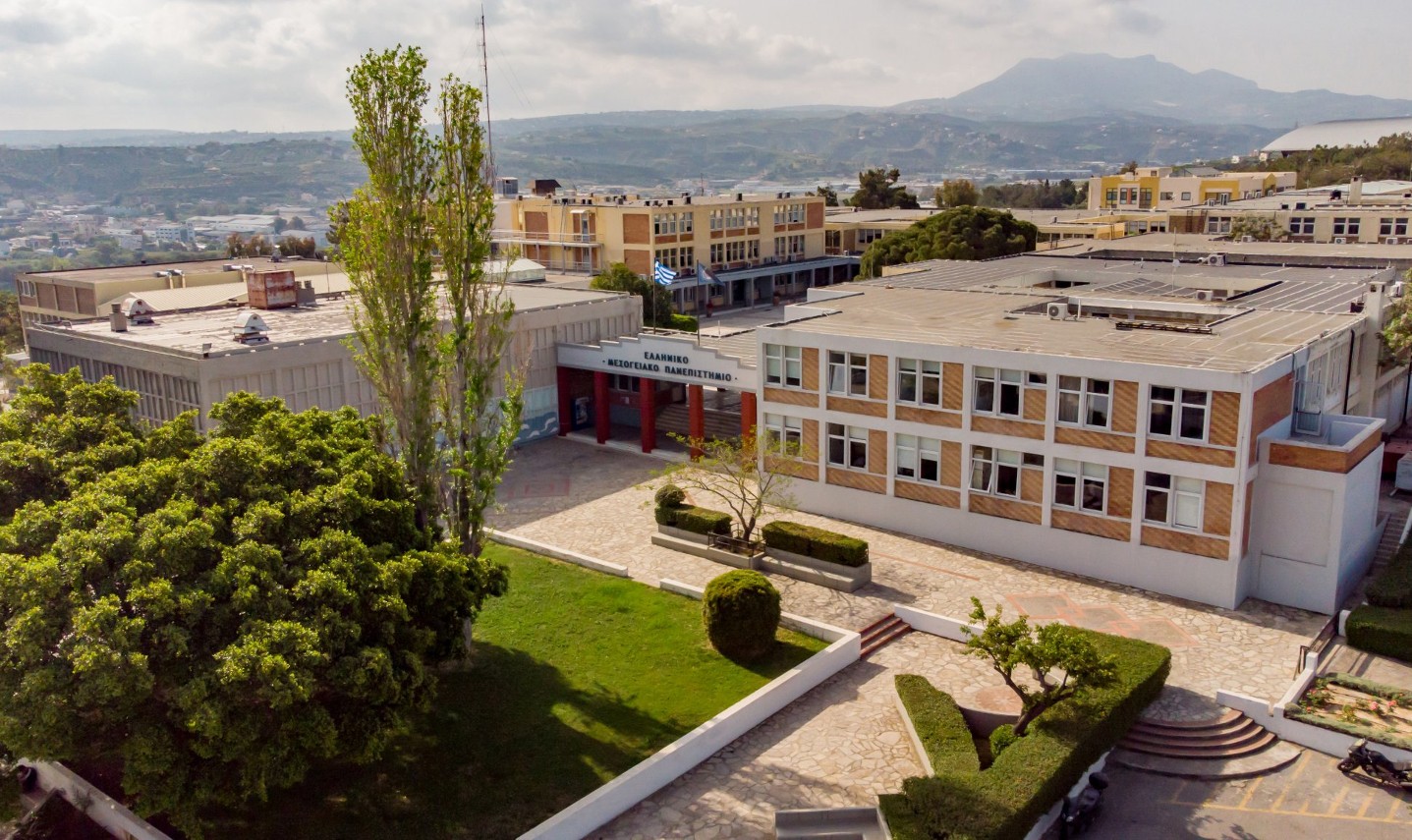
Campus Map – Route to the Library
Organising Committee
Katerina Voutiraki
Head of Library and Information Centre, Directorate of Informatics and Library, Hellenic Mediterranean University.
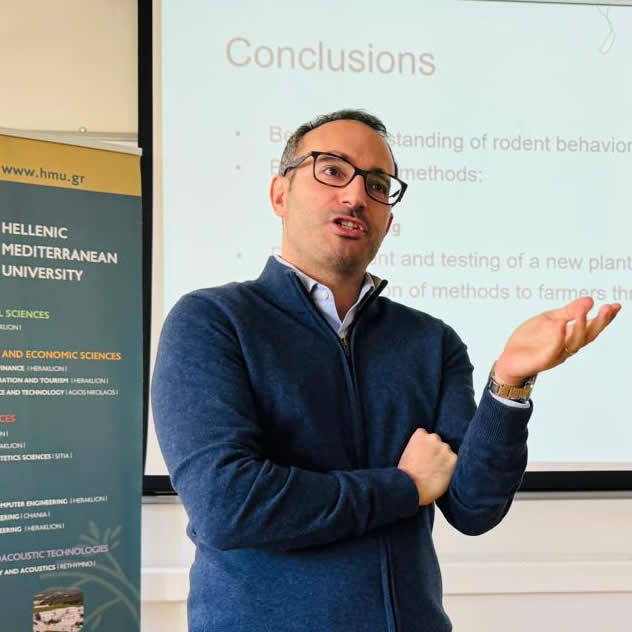
Dr. Ioannis Daliakopoulos
Assistant Professor, Academic Coordinator of the IRO of the HMU
Prof. Kostas Petridis
Vice Rector of Internationalization and Extroversion, HMU
Applications
To take part, you need to register here.
The maximum number of participants is 40, while there are no registration or participation fees. However, participants should make arrangements on their own regarding travel, accommodation and living, the cost of which should be covered by Erasmus+ mobility grants from their home institutions.
The working language of the training week will be English.
The application deadline is Friday June 19th, 2025. Applications will be evaluated on a first come first served basis, while relative replies will be sent immediately after evaluating each application.
Erasmus participants from EU countries:
Dr. Gareth Owens, International Relations Office Director
E-mail: ogareth@hmu.gr
Telephone: +302810379312
International participants from non-European countries:
Ms Christina Giatsina, IRO Administrative Staff
Email: kristinag@hmu.gr
Telephone: +302810-379174
Past events