
Travel Guide to Crete & Heraklion
How to Travel to Crete
Crete is well connected to mainland Greece and international destinations by both air and sea. The island is served by two main entry points: Heraklion International Airport and Chania International Airport, as well as the ports of Heraklion and Chania (Souda).
By Air
1. Direct Flights:
Heraklion International Airport, Nikos Kazantzakis (HER), is well-connected with many European cities, especially during the tourist season (April to October). Many airlines operate direct flights from European capitals and major cities to Heraklion.
Kazantzakis airport: +0030 2810 228402
Airport Police Station: +0030 2810 246720
Chania International Airport, Ioannis Daskalogiannis (CHQ), serves the western part of the island and is an alternative entry point. It is located approximately 140 km from Heraklion and offers a wide range of international flights, particularly during the tourist season.
2. Connecting Flights:
If direct flights are not available from your location, you can fly to Athens International Airport (ATH) and then catch a domestic flight to Heraklion. The flight from Athens to Heraklion is approximately 50 minutes.
By Sea
Ferries:
There are ferries from Piraeus (the port of Athens) to Heraklion. The journey can take anywhere from 6 to 9 hours depending on the service (night ferries are slower but allow for sleeping accommodations). This can be a more scenic and enjoyable way to travel if you have the time.
Estimated duration from Athens to Heraklion or Chania: Overnight journey (~8–9 hours)
The two major companies that operate at both ports are ANEK Lines and Minoan Lines
From Other Islands: If you’re already visiting other Greek islands, you may find direct ferries or boats to Heraklion, especially from Cyclades islands like Santorini during the high season. For more information on ship schedules and pricing click here.
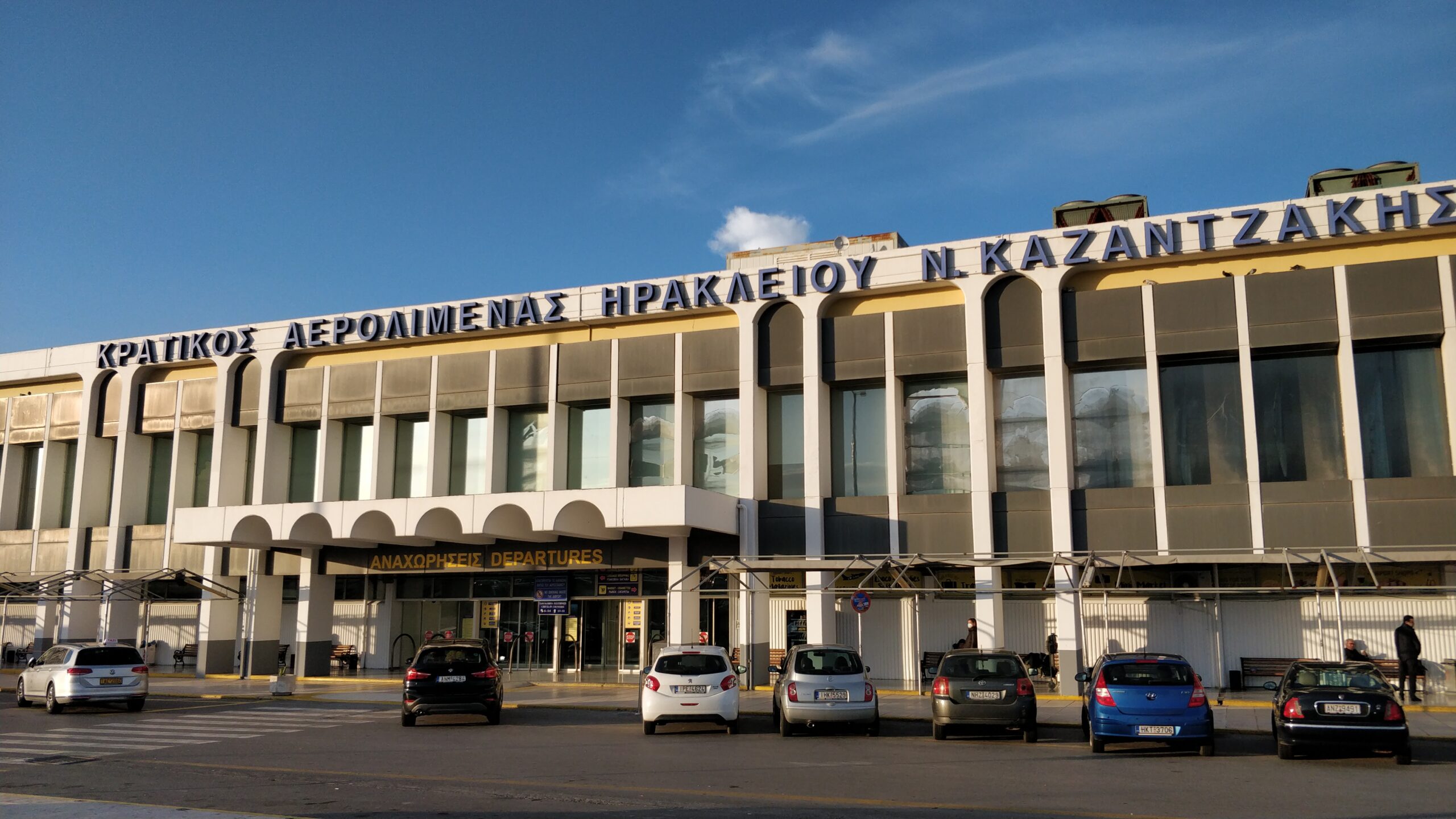
Heraklion International Airport
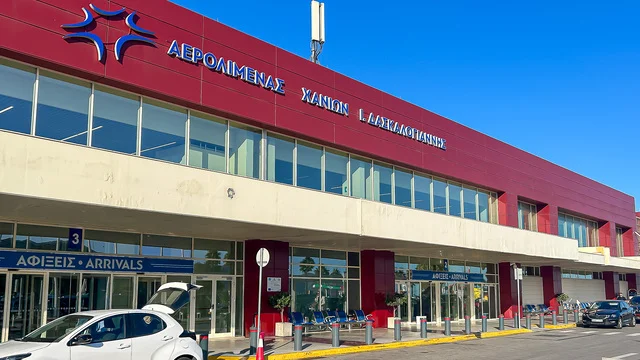
Chania International Airport
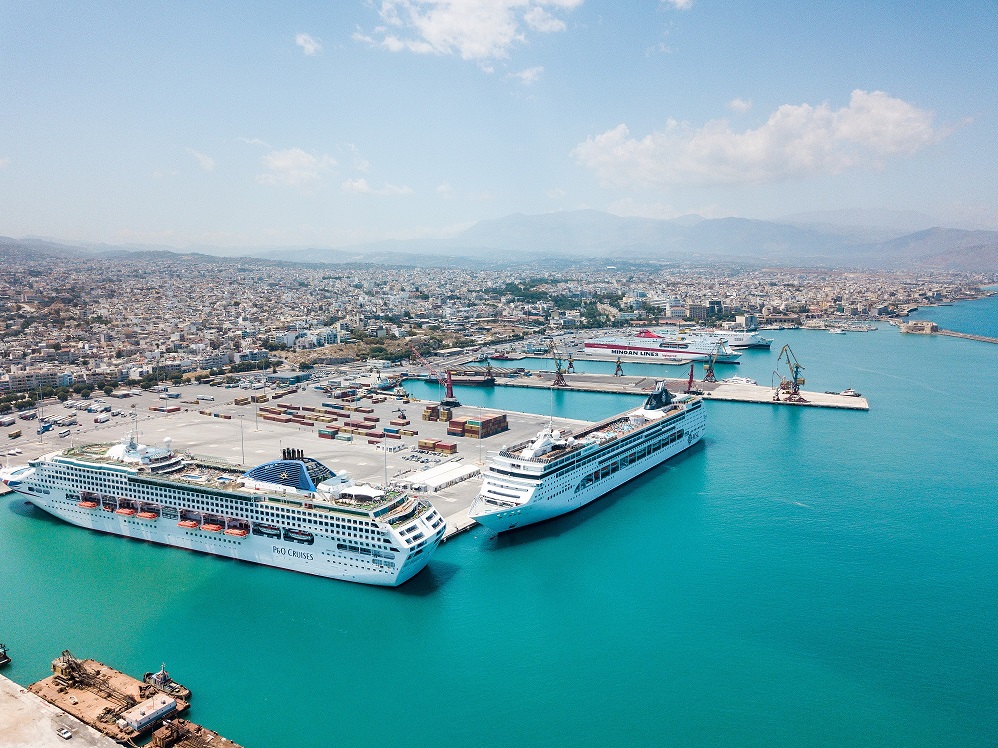
Heraklion Port
Getting Around
Getting Around Heraklion
Heraklion is a compact and walkable city, especially in the central areas. Most daily needs—shops, cafés, services—are within walking distance, making it easy to navigate without a car.
City Buses
Urban transport is operated by local bus services.
Frequent routes connect:
City Center ↔ University campuses
City Center ↔ Airport
City Center ↔ surrounding neighborhoods
Tickets: €1.20 – €2.00 per ride. The bus rides fall into categories based on the destination. Tickets are available at kiosks or on the bus. There is also the option of a day ticket priced at €5.00
For more information on the Heraklion city bus click here
Taxis & Ride Options
Taxis are widely available and relatively affordable compared to other European cities. They can be easily found at taxi stands or by phone and they are common for airport transfers and late-night travel.
Below you can find some of the taxi services in Heraklion.
www.crete-taxi.gr
+0030 6970021970, +0030 6945027933
https://www.herakliontaxi.com/en/index.html,
+0030 2814 003084, +00306945774937
Intercity Travel Across Crete
For traveling across the island, the main option is the intercity bus network operated by KTEL Heraklion-Lasithi. KTEL runs regular buses between Rethymno and Chania and there are services to many inland villages.
Popular Routes from Heraklion:
Heraklion → Chania (~2.5–3 hours, €17.60)
Heraklion → Rethymno (~1.5 hours, €9.90)
Heraklion → Agios Nikolaos (~1 hour, €8.60)
Heraklion → Ierapetra (~2 hours, €13.20)
Ticket prices vary between €5 – €20 depending on distance
For more information on the bus schedules, prices or to book your ticket online you can click here.
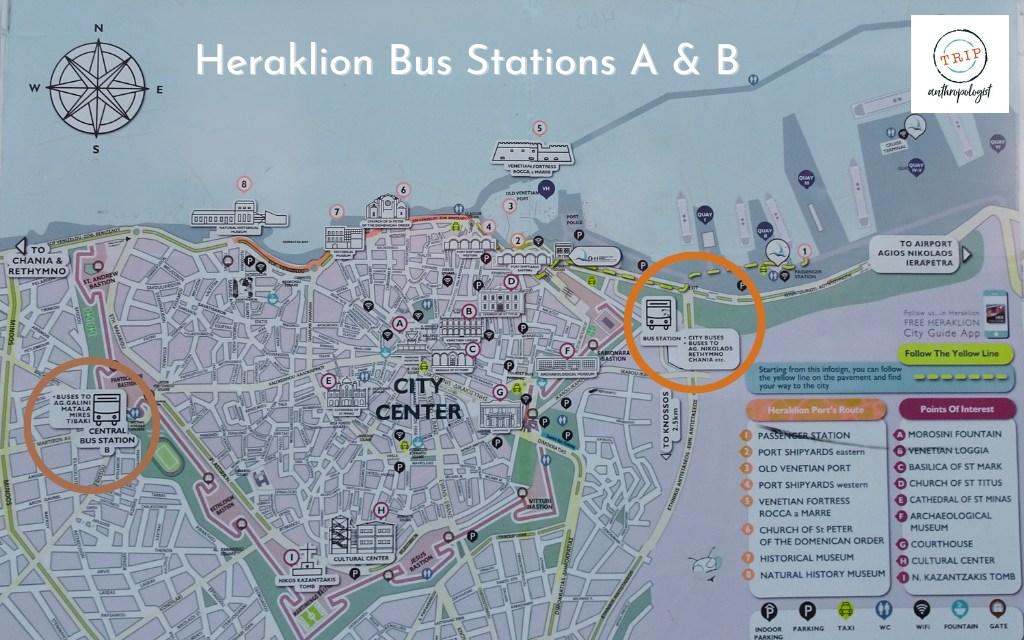
Circled are the two locations of the Central Bus Stations in Heraklion, one near the port and one near Chanioporta.
Accomodation
Heraklion offers a wide range of accommodation options suitable for different needs, lifestyles, and budgets. International students and visitors may choose between private apartments, shared flats, student residences, hotels, and short-term rentals, depending on the duration and purpose of their stay.
The city combines the convenience of urban living with a relatively affordable cost of accommodation compared to many other European destinations. Residential areas near the city center provide easy access to public transportation, shops, cafés, and everyday services, while neighborhoods closer to university facilities offer a quieter academic environment.
Due to increased seasonal demand, especially during the summer months and the beginning of the academic year, visitors are strongly encouraged to arrange accommodation as early as possible. Rental prices may vary depending on location, apartment size, condition, and proximity to the city center or university facilities.
Living in Heraklion
Heraklion offers a relatively affordable cost of living compared to most European cities. With careful budgeting, students can maintain a comfortable lifestyle while enjoying everything the city has to offer.
Food & Groceries
Monthly estimate:
Groceries: €200 – €300
Typical prices:
Bread: €1.00 – €2.00
Milk (1L): ~€1.50
Fruits & vegetables: affordable, especially seasonal
Eating Out
Eating out is common and relatively affordable.
Typical prices:
Coffee ☕: €3 – €6
Gyros / street food: €5 – €7
Casual meal: €12 – €17
Restaurant dinner: €18 – €25
Practical information
Currency & Payments
The official currency of Greece is the Euro (€). Electronic payments, including debit and credit cards, are widely accepted in Heraklion.
Automated Teller Machines (ATMs) are readily available throughout the city. While cashless transactions are common, it is advisable to carry a limited amount of cash for smaller establishments and certain services.
Mobile & Internet
Mobile network coverage and internet connectivity are reliable across Heraklion and the wider region.
Major telecommunications providers include:
- COSMOTE
- Vodafone Greece
- NOVA
Prepaid SIM cards and mobile data packages are widely available and are generally the most practical option for short-term stays. A valid form of identification may be required for purchase.
Useful telephones
Police 100
Ambulance 166 / +0030 2810 222222
Coast Guard 108
Forest Fire Center 191
Fire Department 199
Tourist police 171/ +0030 2810 274046
Municipal Police +0030 2810 334181-5
Municipality of Heraklion +0030 2813 409000
Crete Region Tourism Division +0030 2810 246100
Post Office, Daskalogianni square, +0030 2810 234468
Hospitals
Regional Academic Hospital- PAGNH Tel. +0030 2813 402111
Venizeleio General Hospital Tel. +0030 2813 408000
Going out
Heraklion offers a vibrant and diverse social scene, combining traditional Greek hospitality with modern urban entertainment. Whether you prefer a relaxed evening at a café or a lively night out, the city provides a wide range of options suitable for all preferences.
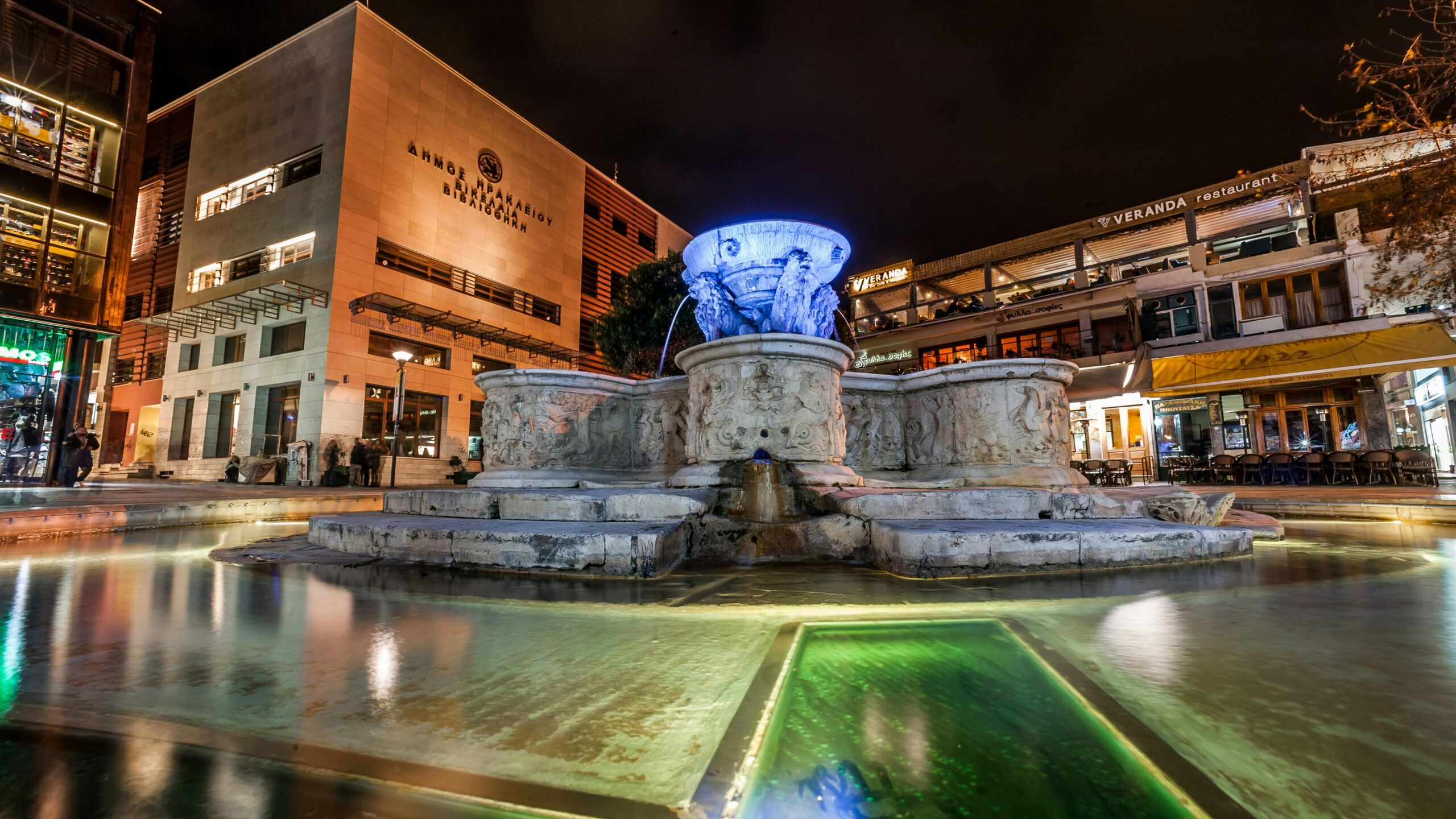
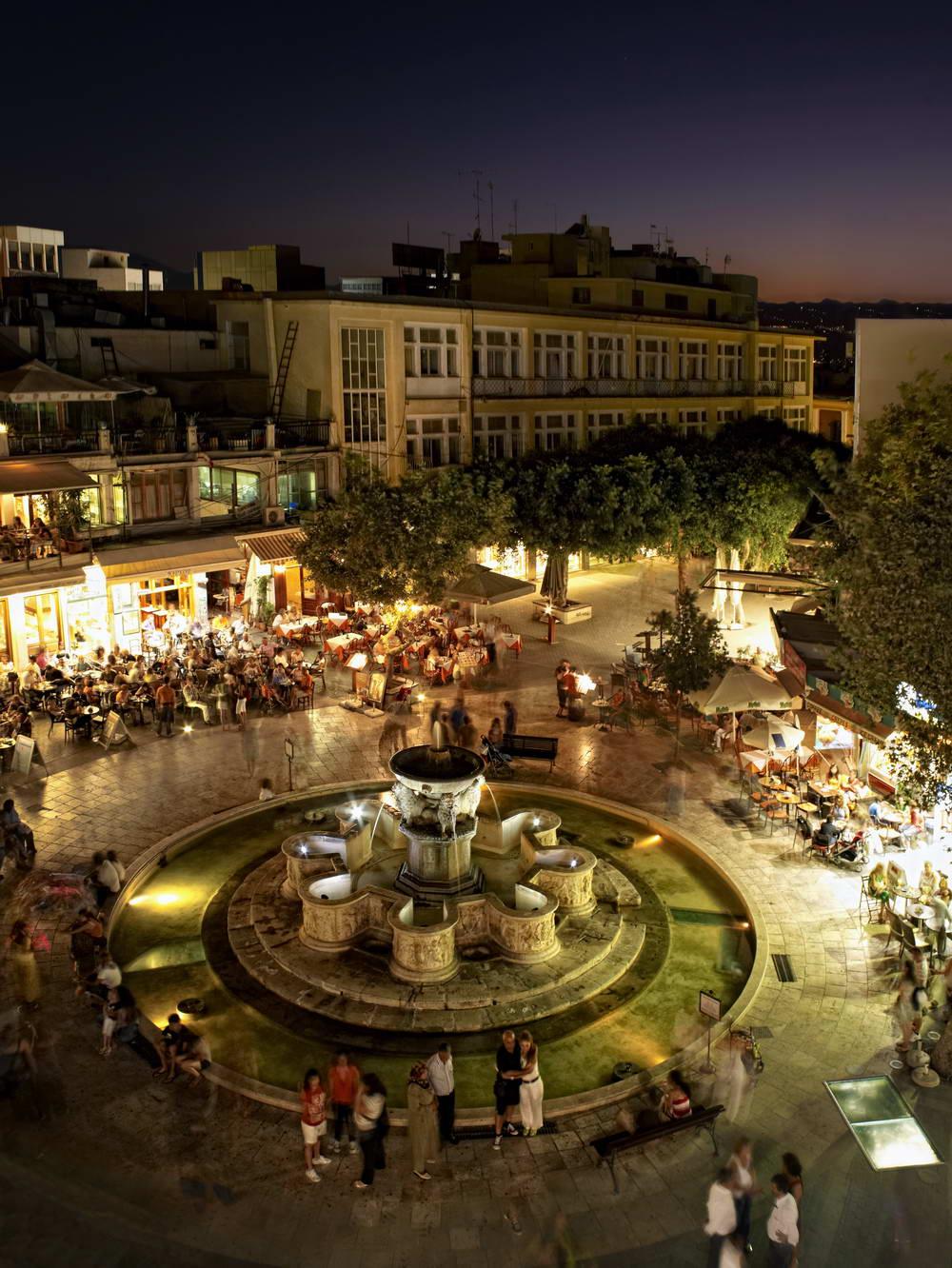
Café culture plays a central role in everyday life in Heraklion. Social activity often begins in the late afternoon, with residents gathering in cafés to enjoy coffee or light meals. Popular areas include the city center and pedestrian streets around Lions Square. Cafés remain busy well into the evening.
Dining out is an essential part of the social experience in Crete. Heraklion offers a wide variety of restaurants, from traditional tavernas to contemporary dining spaces. Meals are typically enjoyed later in the evening (after 21:00)
An important part of social life in Crete is the tradition of meze (or mezédes), a style of dining based on sharing a variety of small dishes among friends and family. Rather than a single main course, meze typically includes a selection of appetizers and local specialties, encouraging a relaxed and social dining experience centered around conversation and hospitality. Meze is often accompanied by local wine, beer, or raki, the traditional Cretan spirit frequently offered as a gesture of hospitality. Meals are usually enjoyed slowly and collectively, reflecting the broader Mediterranean approach to food and social interaction. Experiencing meze culture is considered one of the most authentic ways to engage with everyday life in Crete and provides visitors with an opportunity to explore the island’s culinary traditions in a welcoming and informal atmosphere. In Heraklion, visitors can find traditional tavernas and modern mezedopoleia throughout the city center and surrounding neighborhoods.
Student Social Life
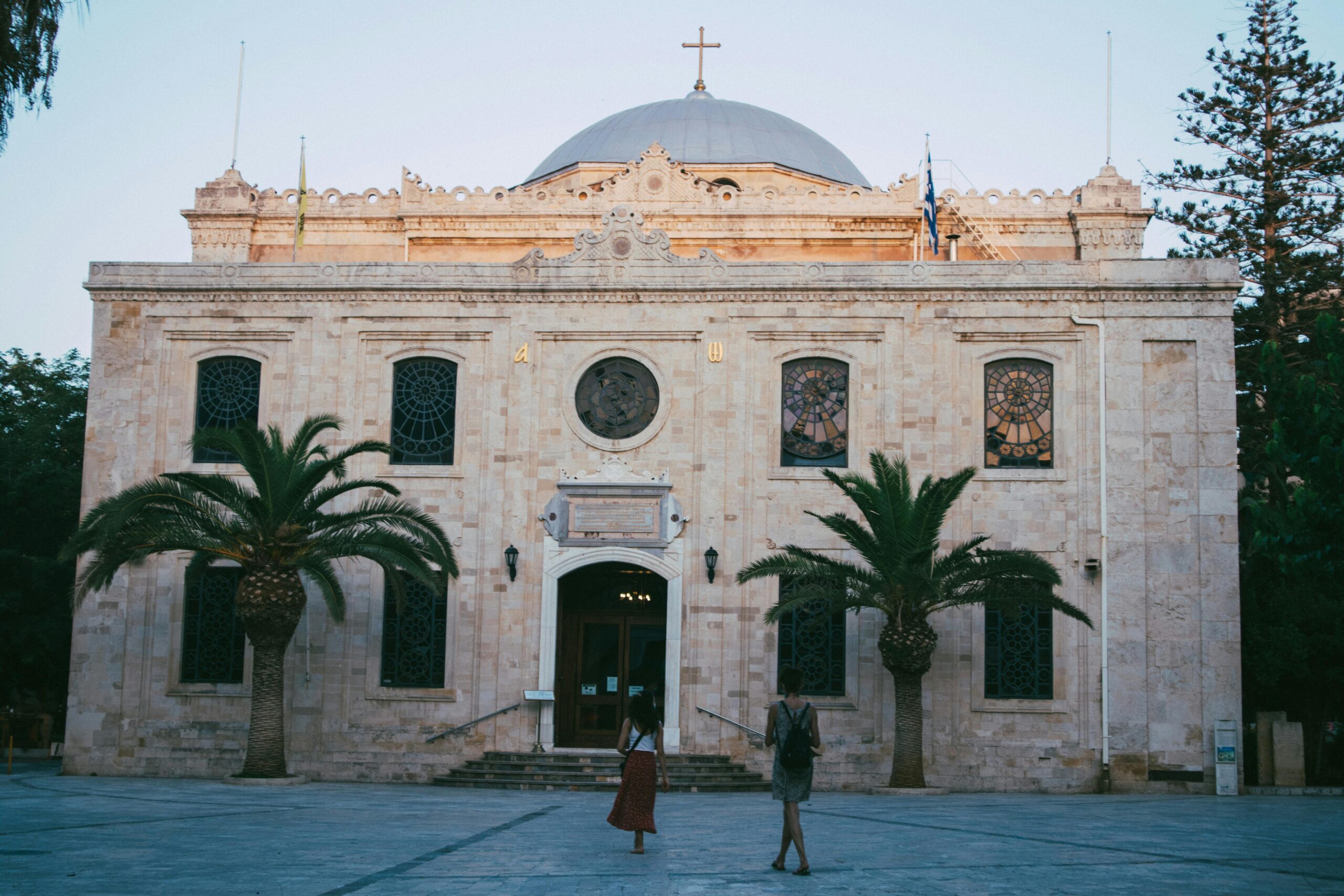
Heraklion has an active student community, contributing to a lively and inclusive social environment. There are four main hubs where students gather, coffe shops all around the Lion's Square, restaurants and bars near St. Minas church, as well as the alleys behind St. Titus' church, and finally at a very picturesque little nook called Lakkos.
Cafés are usually open from around 8:oo till 21:oo , restaurants are typically open from 12:oo until 24:00 and bars open at 23:00 and stay open until the early morning hours.
Museums in Heraklion
Heraklion is widely regarded as one of the most historically and culturally important cities in Greece. With a history shaped by the Minoan, Roman, Byzantine, Venetian, and Ottoman periods, the city offers visitors a unique opportunity to experience thousands of years of cultural continuity through its museums, archaeological sites, and historical monuments. Museums in Heraklion are not isolated cultural spaces, but an active part of the city’s identity and everyday life, connecting the island’s ancient past with its modern character.
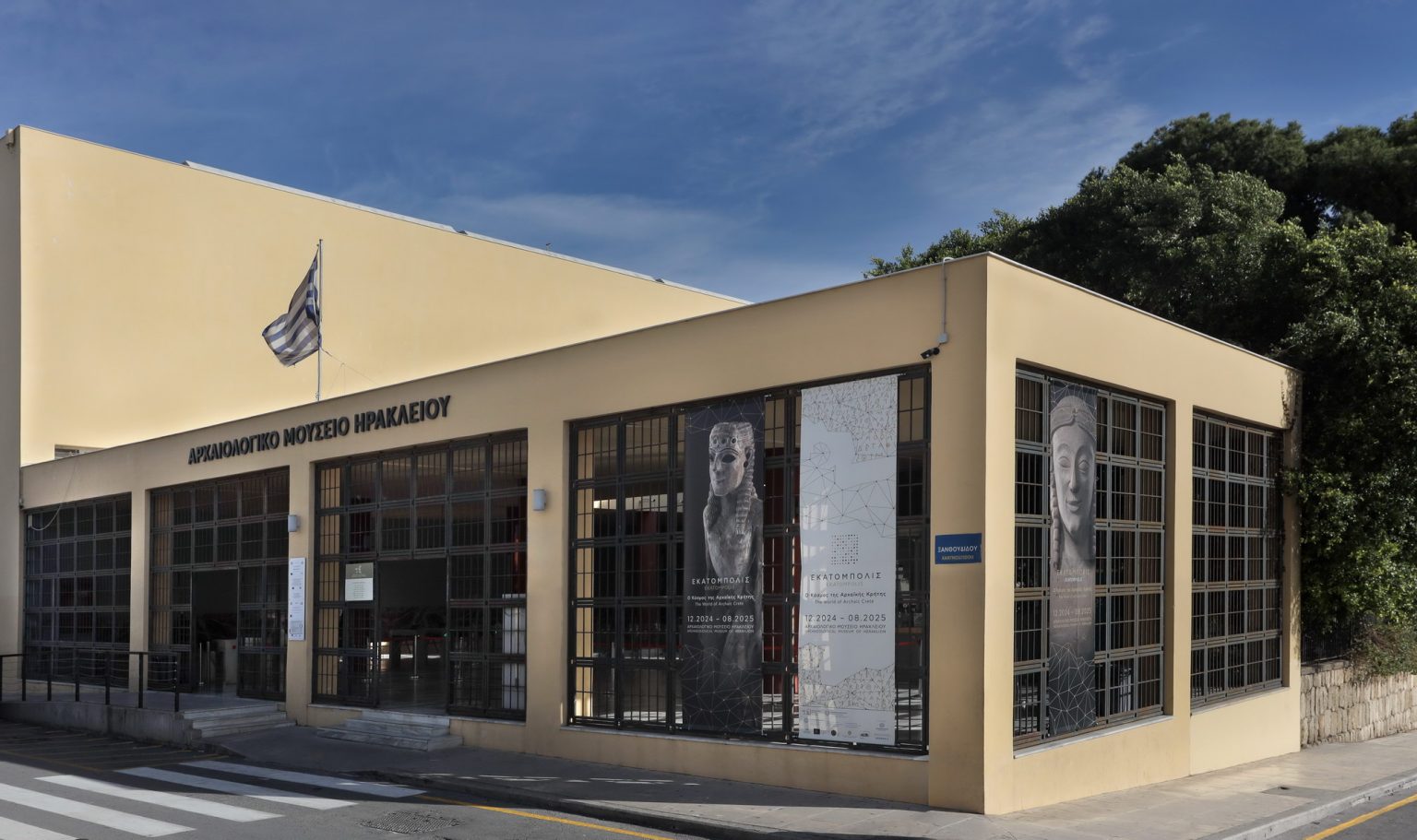
At the center of Heraklion’s cultural landscape stands the Heraklion Archaeological Museum, considered one of the most significant museums in Europe for the study of the Minoan civilization. Its collections include artifacts dating back more than five millennia and offer a comprehensive presentation of the artistic, social, and religious life of ancient Crete. Visitors can explore impressive collections of ceramics, jewelry, sculptures, ritual objects, and frescoes, including some of the most recognizable works of Minoan art. Among the museum’s most famous exhibits is the Phaistos Disc, one of archaeology’s enduring mysteries. The museum’s modern architecture and carefully curated exhibitions create an engaging experience that combines historical knowledge with contemporary museum design.
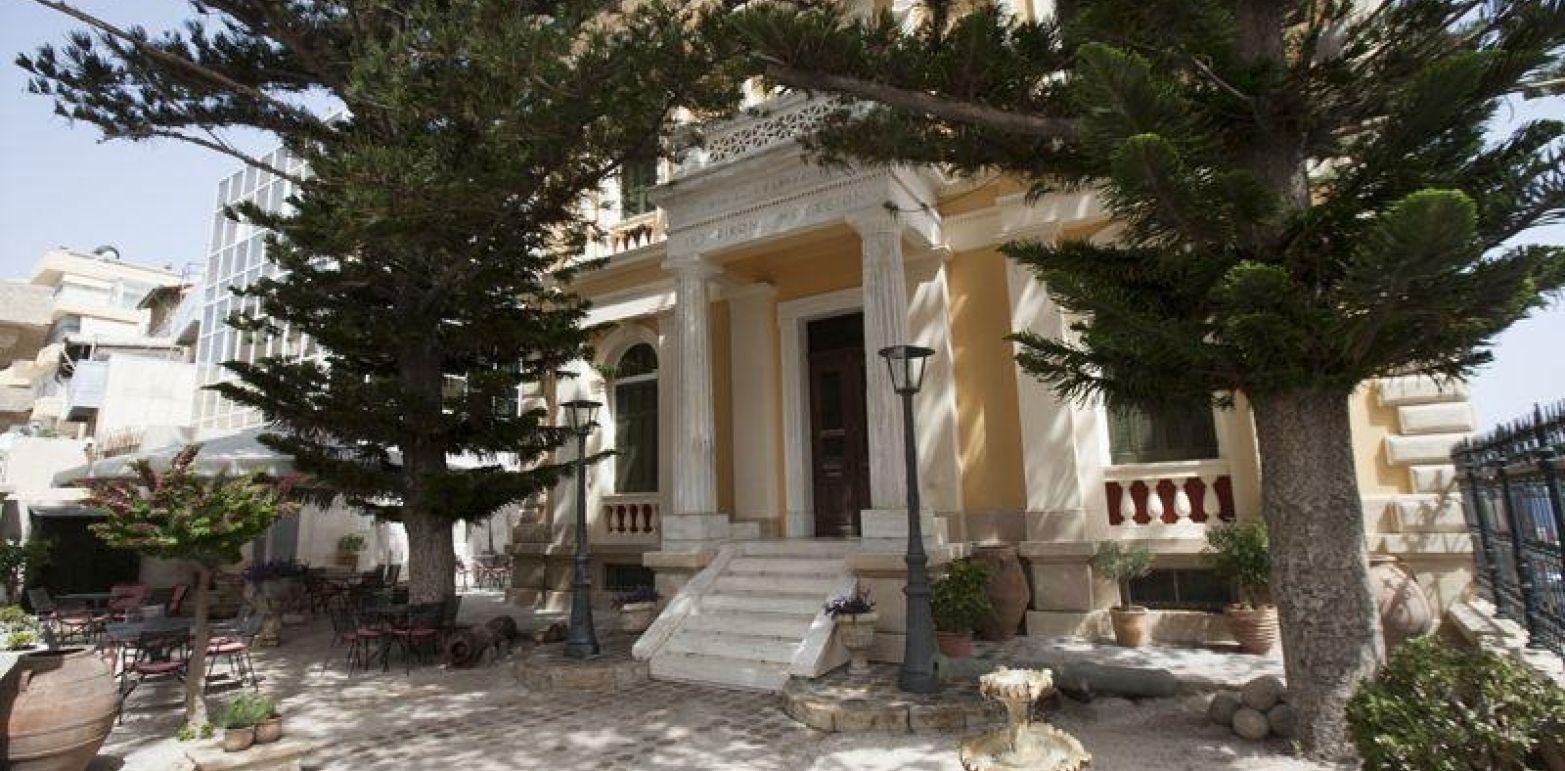
Located near the Heraklion center is another important cultural institution, the Historical Museum of Crete, which presents the island’s history from the early Byzantine era to modern times. Through historical documents, maps, artworks, and personal objects, the museum highlights the political, social, and cultural transformations that shaped Crete over the centuries. Its collections include exhibitions dedicated to the Venetian and Ottoman periods, the struggles for independence, and the events of the Second World War. The museum also hosts works associated with the renowned painter El Greco, who was born in Crete and remains one of the island’s most internationally recognized artistic figures.
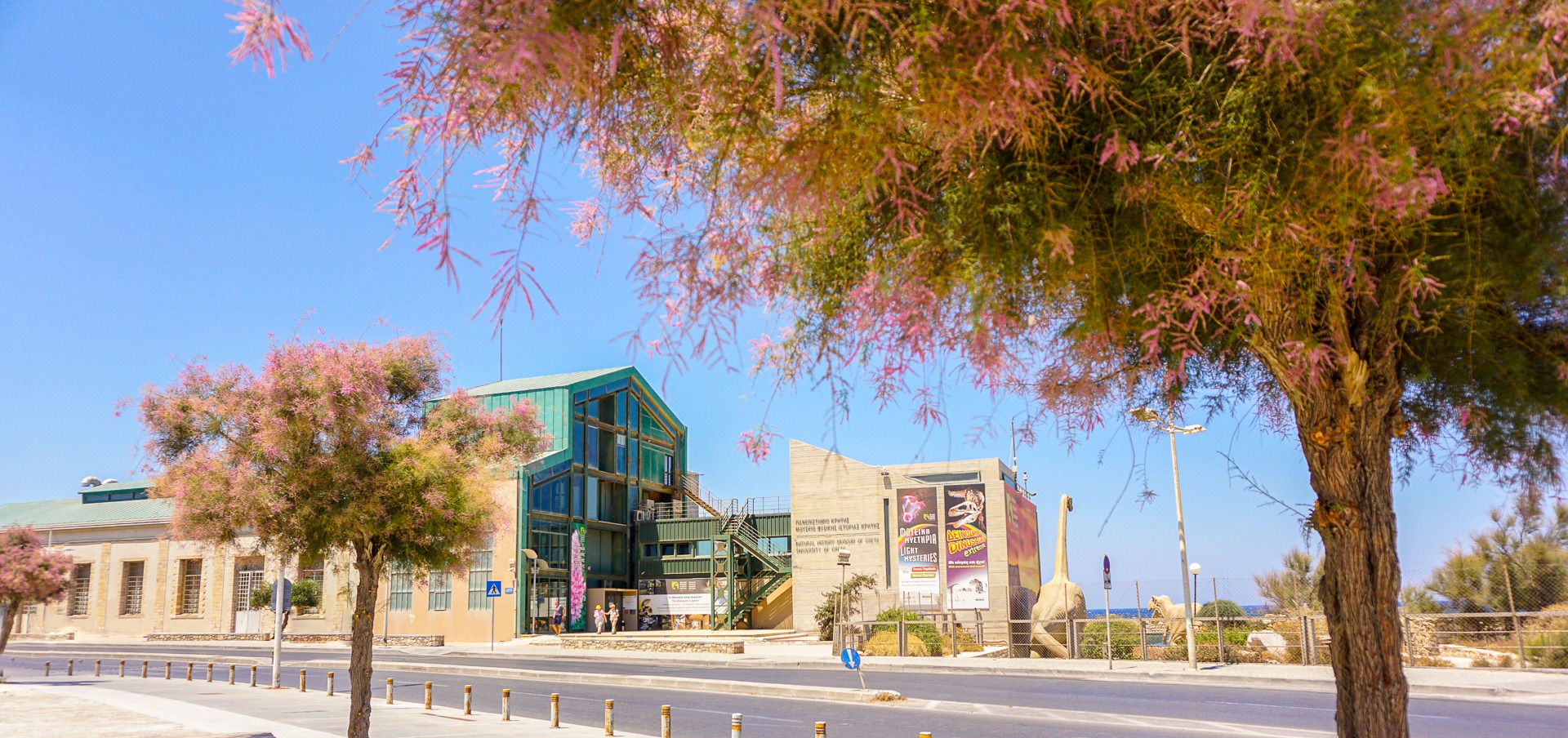
Located near the city center and the coastal area of Heraklion, is the museum of Natural History. The museum is dedicated to the natural environment, biodiversity, and geological evolution of Crete and the wider Mediterranean region. It offers a modern and interactive experience through exhibitions focusing on the island’s unique ecosystems, flora, fauna, marine life, and geological activity. Visitors have the opportunity to explore collections featuring endemic species of Crete, fossils, minerals, and detailed representations of Mediterranean habitats, providing insight into the environmental diversity that characterizes the island. One of the museum’s most notable attractions is its earthquake simulation exhibit, designed to familiarize visitors with seismic phenomena in an engaging and educational way.
Beaches & Excursions
Crete offers a unique combination of coastal landscapes, natural beauty, traditional villages, and historical sites, making the island an ideal destination for exploration and outdoor activities. From organized beaches near Heraklion to remote coastal areas and scenic excursions across the island, visitors have the opportunity to experience a wide variety of landscapes and cultural environments during their stay.
Whether for short day trips close to the city or longer journeys throughout Crete, the island provides countless opportunities for relaxation, cultural discovery, and adventure. The following sections present selected beaches and destinations both near Heraklion and across the wider region of Crete, offering visitors the chance to explore some of the island’s most distinctive locations.